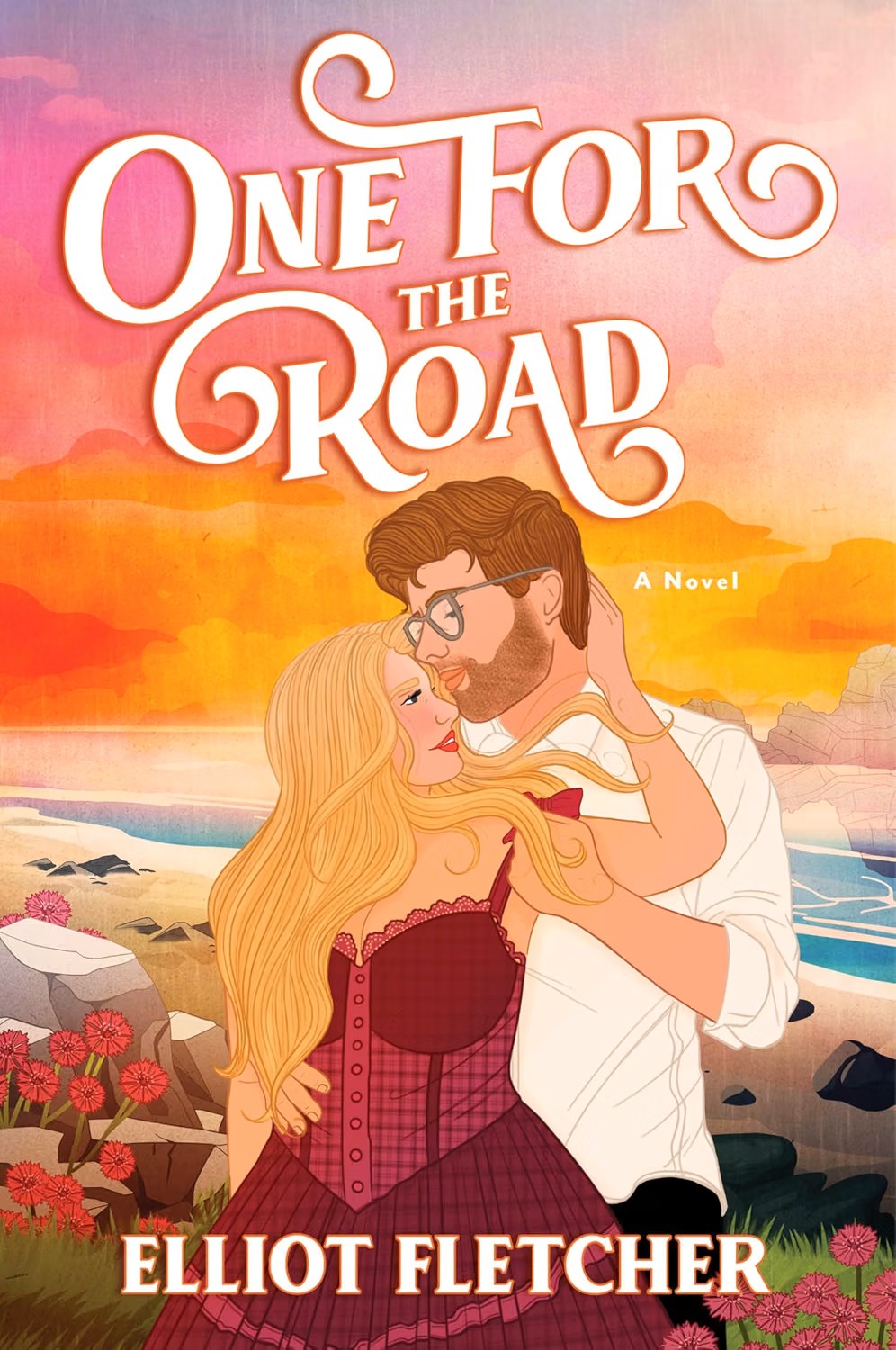
Title: One for the Road
Author: Elliot Fletcher
Series: The Macabe Brothers (Book #3)
Genre: Contemporary Romance
Subgenre: Scottish Romance | Small-Town Romance | Romantic Comedy | Grumpy x Sunshine | Fake-Dating
⭐My Rating: 4.25/5
🌶️My Spice Rating: 3.5/5 (open door w/multiple on-page sexual encounters with explicit language)
Publication Date: August 25th 2026 –> OUT NOW
- Opposites attract
- Fake dating
- Forced proximity
- Single mother
- Grumpy × sunshine
- Next-door neighbors
- Small-town meddling
- Returning home
- Burned-out doctor
- Jealous-ex shenanigans
- “This is only pretend” (narrated by liars)
Potential readers should prepare for themes involving professional burnout, emotional exhaustion, the end of a relationship, difficult ex-partner and co-parenting dynamics, infidelity of a previous partner, death of parent from Alzheimer’s (off-page), mentions of medical negligence (off-page), postpartum insecurities, parental stress, small-town scrutiny, and adult sexual content.
Content notes can be personal and editions may vary, so readers with specific sensitivities should consult additional detailed resources before reading.
Burned-out GP Alistair Macabe never expected, nor did he particularly want to return to his tiny hometown on the Isle of Skye. Unfortunately, restarting his medical career requires something he is not currently overflowing with and that is local goodwill.
Next door is Isla, a newly single mother whose schedule is already overbooked with responsibilities, and she has approximately zero spare minutes for a grumpy physician carrying an emotional rain cloud. She does, however, have a smug ex she would not mind unsettling.
The solution is obviously a fake relationship. Alistair gets a much-needed popularity upgrade with the residents, Isla gets to ruffle her ex’s carefully arranged proverbial feathers, and no one develops inconvenient feelings. It is tidy, practical, and absolutely foolproof that is provided they ignore the proximity, the attraction, and the increasingly enthusiastic commitment both participants bring to their “roles.”
This premise pressed several extremely specific dopamine buttons for myself i.e. a remote Scottish setting, neighbors with incompatible dispositions (I love a heated dynamic), weaponized fake affection (triggering for me), and two adults who believe a set of relationship rules can protect them from their own nervous systems. Adorable. Clinically and realistically delusional, but adorable all the same.
The story gives weight beneath the banter in that neither character arrives as a blank romantic canvas. Alistair is depleted (read: severely burnt out), Isla’s life is already full, and their arrangement has consequences beyond whether they kiss convincingly in public. It was an excellent plotline premise for me to read, I enjoyed it greatly. I found that their romance must fit around identity, work, parenthood, community, and the tender indignity of being perceived when both would prefer to control the narrative.
From a neurodivergent perspective, the fake-dating structure is especially satisfying because it creates explicit rules for an emotionally ambiguous situation. There is a role, a script, and a mutually agreed purpose. Lovely! Except attraction refuses to respect the agenda. Then I always enjoys watching those rules get broken and bent left right and center. The delicious tension comes from watching structured performance blur into genuine attachment. The questions I really appreciated answering during this read where: “Which touches are strategic? Which glances linger too long? At what point does “selling the relationship” become an elaborate excuse to keep standing inside each other’s personal space?”
Thie story speaks about the exhausting gap between outward function and internal capacity. Burnout does not always look like collapse; sometimes it looks like irritability, withdrawal, rigid self-protection, or simply having nothing left for one more demand. Alistair’s grumpiness therefore has emotional context, while Isla’s brighter energy does not erase the labor and pressure of rebuilding life as a single mother. Neither character is reduced to a trope-shaped cardboard cutout.
Sunshine with Responsibilities and Teeth
Isla is not sunshine because her life is uncomplicated; she shines while carrying complication. Newly single and raising a child, she does not have the luxury of floating through the romance as a whimsical cure for male unhappiness. She has responsibilities, history, and motives of her own, including the magnificently normal human desire to disturb the peace of a smug ex.
Her energy gives the story buoyancy, but her strength lies in the boundaries beneath it. I loved reading about her setting boundaries even though I felt she was kind of dumb, but she protects herself and her child. I have nothing but respect for this move from her during the read.
I liked that she could meet Alistair’s grouchiness without becoming his emotional rehabilitation facility. She brings warmth, wit, and momentum while remaining grounded in the practical realities of motherhood and starting over.
Also, any woman in my honest opinion, who can juggle parenting, an ex, small-town observation, and one medically licensed thundercloud deserve both respect and uninterrupted snacks and 8 hours of sleep a night.
The Doctor Is In…and Emotionally Unavailable & Distraught
Alistair is a burned-out GP (general practitioner or primary care physician, if you’re from the US) returning to a hometown he never intended to reclaim. He is grumpy, guarded, and in need of a popularity campaign (he has made himself quite unlikeable and he’s a bit of snob…although I could argue his has quite significant autism).
For me what really made him compelling is the vulnerability beneath the frost. He doesn’t necessarily care what people think of him but he is learning that he needs to try and make friends or just boost his ratings in general to achieve his goals. He is extremely rational and self-aware to an extreme degree but through the book you see him understand he needs to try and change. I enjoyed relating to his decisions as I have a tendency to do the exact same in my life.
Burnout has consequences: it alters tolerance, confidence, identity, and a person’s relationship with the work that once gave them purpose. His return is therefore more than geographic. He must decide whether home, medicine, and connection can become things he chooses rather than burdens he survives. I related hardcore to this feeling. I am a physician myself in a residency and in a specialty with a high burnout rate associated with it. I imagine someday I will experience similar feelings, and I felt this was written extremely accurately.
And yes, the grumpy doctor exterior has undeniable appeal. He can probably assess your vital signs while refusing to acknowledge that his own heart rate mysteriously increases whenever the woman next door enters the room. Sir, that is not an incidental finding.
Alistair and Isla have chemistry built on opposition, proximity, and the ever-reliable romantic tradition of getting far too committed to a fake assignment setting rules and then discovering the fun that can be had when you break said rules. His reserve gives her spark something to ricochet against, while her warmth keeps slipping beneath defenses he would very much like to classify as medically necessary.
Their attraction works because it is not merely physical. I felt that they genuinely respected each other’s intellect and personalities. The physical desire is threaded through irritation, attention, vulnerability, and the small betrayals of body language that occur when two people are supposedly performing for an audience. A fake touch can be rehearsed. The instinct to notice what the other person needs? The ability to accept and respect the person coming from where they are at? All considerably harder to explain away in my opinion.
The tension has that excellent “we are doing this for credibility” flavor, the traditional mating call of fictional adults who are one lingering kiss away from losing custody of the shared brain cell.
Together, Isla and Alistair are a collision between warmth and withdrawal, spontaneity and control, crowded real life and carefully maintained distance. Their fake relationship gives both permissions to practice intimacy without initially naming it as intimacy, which is safe, sensible, and destined to go spectacularly wrong.
As I have previously alluded to, the pleasure is in the slippage of the agreed-upon plan. They start by putting on a show for other people, yet the performance asks them to pay attention to one another. Proximity creates familiarity. Familiarity creates care. Care begins doing indecent things to their supposedly practical arrangement.
Soon the line between “convincing the town” and “conducting an unnecessarily thorough private rehearsal” becomes approximately as visible as a road marking in Scottish fog. It sounds as delicious as it was to read. I enjoyed this greatly between these two character. The relationship was written incredibly well.
I felt that their dynamic balances comedy and tenderness well, Isla disrupts his isolation, Alistair offers steadiness beneath the scowl, and both discover that being wanted is very different from being conveniently cast in a role. The romance lands because neither simply fixes the other. Instead, they create room for honesty, choice, and a version of home neither expected to find next door.
In my opinion Elliot Fletcher’s writing style suits the premise: i.e. the warm, playful, atmospheric, and emotionally aware setting. The Isle of Skye is more than decorative scenery; the small-town setting amplifies every glance, rumor, and questionable public display of fake affection. I have been to the Isle of Skye, Scotland is one of my favorite places and I love whisky (yes, that is the correct spelling), Fletcher describes it perfectly in each McCabe book she writes. Indeed, privacy is scarce, witnesses are plentiful, and community opinion travels faster than an unsecured prescription pad.
The humor grows naturally (she didn’t force the jokes or the banter) from personality clashes and escalating commitment to the charade, while the emotional current keeps the story from feeling weightless. The prose allows banter, setting, vulnerability, and steam to share the page without one flattening the others.
- The fake-dating setup has clear benefits for both characters, giving the arrangement mutual stakes.
- Alistair’s professional burnout adds depth to the standard grumpy-hero archetype.
- Isla has an identity and responsibilities beyond serving as the hero’s source of sunshine.
- The Isle of Skye and close-knit hometown atmosphere heighten both the romance and comedy.
- The neighbors-to-lovers proximity keeps the tension simmering even when the couple is off public-performance duty.
- The relationship develops through attention and emotional intimacy, not attraction alone.
- The steam feels earned by the mounting tension rather than dropped into the story by emergency helicopter.
- The humor and tenderness balance one another without erasing the characters’ real pressures.
- Some of the fake-dating beats and emotional turns will feel familiar to experienced romance readers.
- A few misunderstandings could likely be shortened by direct adult communication…an endangered species in Romancelandia.
- The ex-related motivation may not appeal to readers who dislike jealousy or relationship decisions partly shaped by a former partner.
- Readers hoping for extensive medical details may find that Alistair’s profession functions more as character context than a procedural focus.
None of these significantly disrupted my enjoyment, but they kept the book just below a full five-star Archive categorization.
This is a character-driven contemporary romance, not a medical drama. Go in expecting a cozy Scottish setting, small-town involvement, parenting realities, emotional recovery, fake-dating antics, and open-door steam. This is not Isle of Sky’s version of Grey’s Anatomy.
The “sunshine” in grumpy × sunshine should not be mistaken for emotional simplicity. Isla is not toxically positive. Isla’s life includes the strain of being newly single and caring for a child, while Alistair’s burnout informs his mood and choices. Their relationship unfolds around those realities rather than in a responsibility-free romantic bubble. Readers who love heavily original trope subversion may recognize many of the genre’s familiar road signs. Readers who come for beloved tropes executed with warmth, chemistry, humor, and a rugged Scottish backdrop should settle in comfortably.
Final Diagnosis
One for the Road is a warm, sexy, funny Scottish romance about returning home, rebuilding after exhaustion, and discovering that the person most capable of disrupting your peace may also be the one who makes peace possible.
Alistair and Isla deliver opposite-attract friction, fake-dating chaos, next-door temptation, and enough emotional sincerity to give the familiar setup a satisfying pulse. I especially appreciated that their romance exists alongside burnout, parenthood, community expectations, and the complicated work of beginning again i.e. what I call real life.
This one earned its place in the Archive for excellent chemistry, charming chaos, and a fake relationship pursued with a level of dedication that should probably require informed consent and cardiac monitoring.
Archive Status
Filed Under: Fake Dating, Highland Heat & Grumpy Doctors with Critically Low Emotional Availability
Clinical Impression: A charming case of neighbors-to-lovers complicated by professional burnout, single-mom sunshine, small-town surveillance, and a fake relationship pursued with medically concerning enthusiasm.
Final Disposition: Admitted to the After Dark Archive for steamy Scottish chemistry, emotionally constipated physician behavior, and one spectacularly ineffective attempt to keep things strictly pretend.
Until next time—hydrate, check your blind spots, and never fake-date the grumpy doctor next door unless you are prepared for a dangerously positive response to treatment.
–Dr. Dopamine After Dark, MD
Prescribing one Highland brooder, taken with steam, as needed for acute trope deficiency.
ARC Review Disclaimer
I received an advanced copy of One for the Road by Elliot Fletcher. I am sharing this review voluntarily, and all opinions, ratings, reactions, and medically unnecessary observations about fictional Scottish doctors are entirely my own. Receiving an ARC did not influence my rating or commentary.
Ways to Follow the Dopamine
Want more fictional red flags, morally questionable love interests, neurospicy commentary, and books hot enough to require cardiac monitoring?
Follow The Neurospicy After Dark Archive wherever your scrolling habits currently live:
- The Blog Site: Subscribe to the Archive email so new reviews arrive directly in your inbox.
- Instagram: Follow for carousel reviews, chaotic reactions, and aesthetically organized literary emergencies.
- Pinterest: Save reviews, reading lists, character inspiration, and other dopamine-friendly discoveries for later.
- Facebook: Follow for new-post alerts, book discussions, and updates from deep inside the Archive.
- Linktree: Find every door into the Archive. Choose your preferred route to the chaos.
Comments, recommendations, and respectful arguments about fictional Scottish doctors are always welcome. Come for the books, stay for the dopamine, and bring snacks…the Archive is open after dark.


 The Neurospicy After Dark Archive
Leave a comment